
What is Finger-jointed Timber?
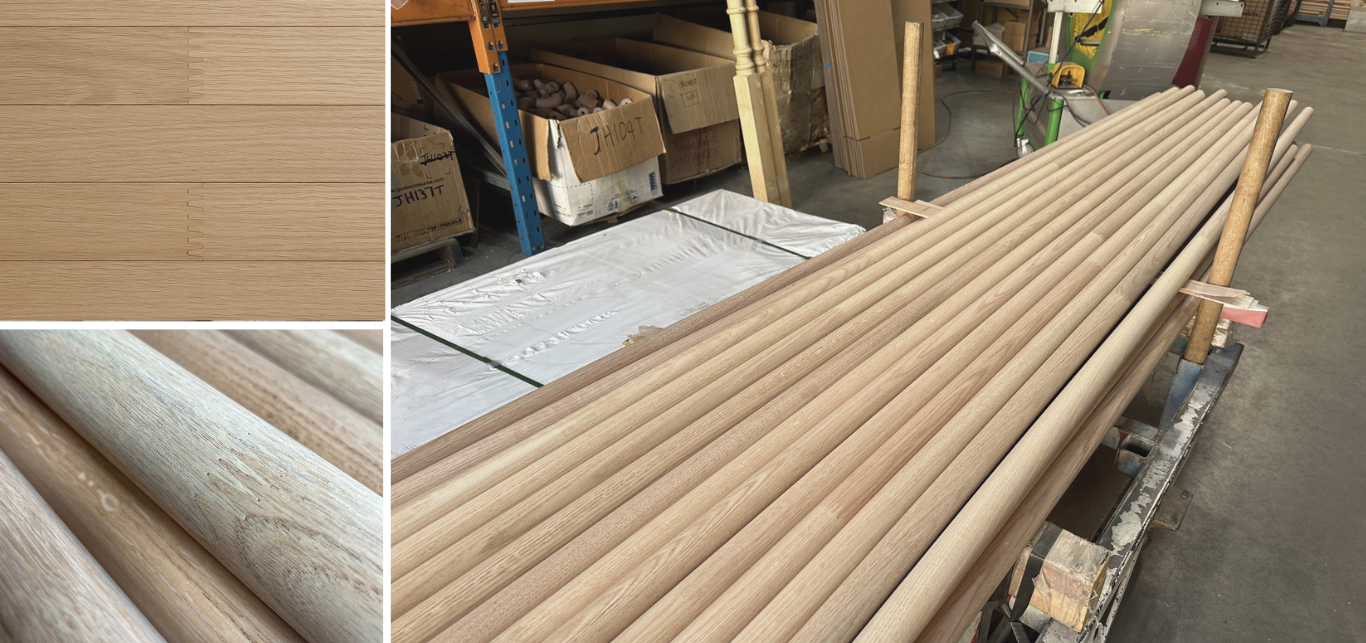
What is Finger-jointed Timber?

Finger-jointed timber is a solid timber product made by joining shorter lengths of timber end-to-end using a finger joint (an interlocking pattern that creates a stronger bond than a standard butt joint).
The biggest advantage of finger-jointed timber is that it allows for longer, straighter, and more stable lengths than would be possible with single, unjoined pieces. This makes it ideal for applications like handrail and wall panelling, where consistent long lengths are important. It also means that timber species with naturally shorter lengths, like American Oak, can now be used in ways that wouldn’t have otherwise been practical.
Benefits of Finger Jointed Timber
- Available in set lengths: Unlike most other timber, which is only available in random lengths, finger-jointed timber comes in consistent, set lengths—making it easier to plan and reduce waste on the job.
- More affordable: Because finger-jointing uses offcuts and shorter pieces that would otherwise go to waste, it’s a more cost-effective way to get long lengths of high-quality timber
- Straighter & less chance of warping/bowing: Because finger-jointed timber is made from shorter pieces of wood, it’s a much straighter product. It’s also less likely to twist or bend over time! The different grain directions help balance out the natural movement you’d normally get in a single piece of timber.
- Strong and stable: Finger-jointed timber is often structurally stronger than unjoined timber; as natural weak points, defects and variations (such as knots or gum veins) are removed during the joining process.
- Sustainable: It makes use of shorter lengths of timber that might otherwise be discarded.
Frequently asked questions about finger jointed timber
What timber species is it available in?
Right now we offer finger jointed pine and American Oak only.
Can you see the finger joints?
Yes, the joints are visible, but in many species, particularly American Oak, they're well very colour-matched and blend in nicely. See some examples below:

How far apart are the joins spaced?
How far the finger joins are spaced from one another depends a lot on how the timber is intended to be used.
- In species like pine, the joins are closer together, usually spaced every 600mm to 1.2m, because it is typically used in paint-grade applications where the joins will be covered.
- In hardwood species like American Oak, the spacing is generally further apart, often between 1.2m and 2.5m, so that it can be used for more decorative applications.
Can you use finger-jointed timber for external applications?
Most of our finger-jointed timber products are designed for interior use only, however they has been made with exterior safe glue. So, if you’re planning to use it outside, make would just need to make sure you treat it appropriately, with a H3 or H4 treatment before painting.
Can it be stained or painted?
Yes! Finger-jointed timber can be finished just like solid timber.
- Paint-grade species like pine are ideal if you're planning to paint the handrail, as the joins will be hidden.
- Hardwoods like American Oak can be stained, lacquered or oiled to enhance their natural grain. However just note that dark stains may settle in the finger joints, making them more visible.